
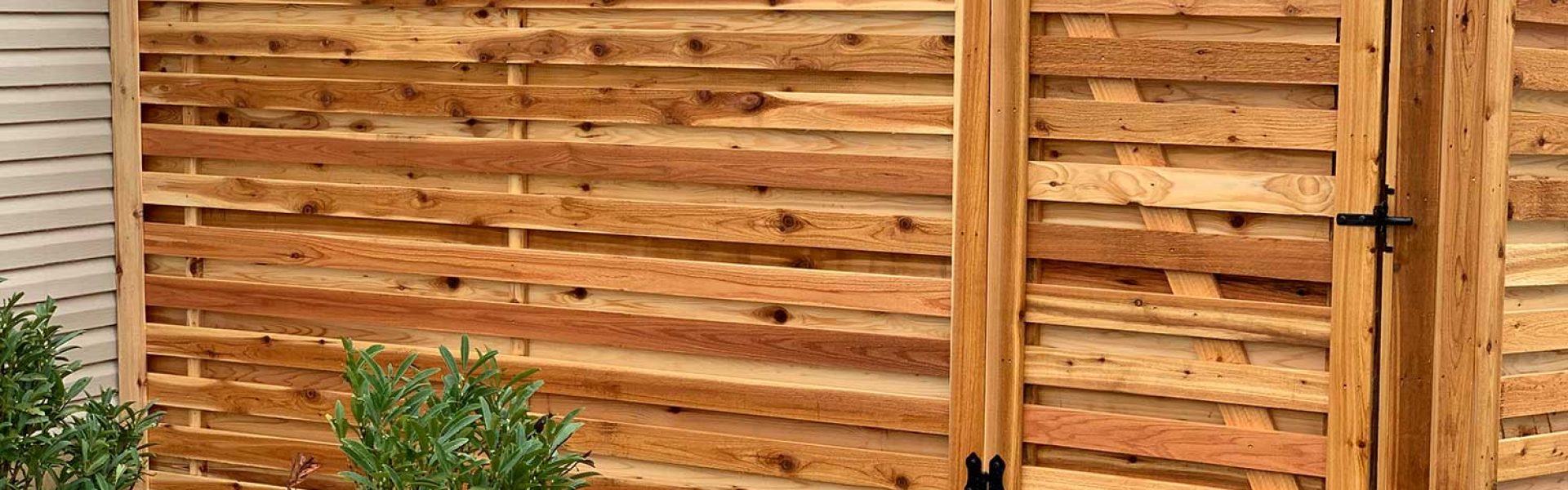
Most fence-staining failures occur when homeowners do not let the stain dry long enough. Dry time refers to the period between stain application and when the wood is safe to touch, recoat, or be exposed to rain and other outdoor elements.
If you’re wondering, “How long does stain take to dry?“, this guide is for you. For three generations, Champion Fence has helped homeowners throughout the South and Midwest protect their outdoor spaces with dependable wood fence installation expertise. Here’s everything you need to know about fence stain dry times, how many coats your fence needs, and the common mistakes to avoid.
How Long Does Wood Stain Take to Dry? (By Stain Type)
Drying times vary based on the stain formula, weather conditions, and wood species. The ranges below are typical for outdoor fence projects, but always check the manufacturer’s instructions for the specific product you are using.
Water-Based Stain Dry Times
How long does it take water based stain to dry?
Water-based stains perform best in warm, low-humidity conditions. One downside is that they can slightly raise the wood grain, which may require light sanding between coats for a smoother finish.
| Drying Stage | Typical time |
|---|---|
| Touch Dry | 1-2 hours |
| Re-Coat Window | 4 hours |
| Full Cure | 24-48 hours |
| Rain-Safe Window | 4-8 hours |
Oil-Based Stain Dry Times
How long does it take oil based stain to dry?
Oil-based products generally require a longer wait time because they penetrate deeper into the wood. Most oil-based stains need at least 24 hours without rain, while some products recommend waiting up to 48 hours.
| Drying Stage | Typical time |
|---|---|
| Touch Dry | 4-8 hours |
| Re-Coat Window | 24-48 hours |
| Full Cure | 48-72 hours |
| Rain-Safe Window | 24-48 hours |
Solid and Semi-Transparent Stain Dry Times
Solid and semi-transparent stain dry times vary by formula. Semi-transparent stains soak deeper into the wood, while solid stains leave more pigment on the surface. Because formulations differ widely, always follow the product label for the most accurate drying timeline.
| Drying Stage | Typical time |
|---|---|
| Touch Dry | 2-8 hours |
| Re-Coat Window | 4-24 hours |
| Full Cure | 24-72 hours |
| Rain-Safe Window | 8-48 hours |
How Many Coats of Stain Does a Wood Fence Need?
Most wood fences need 1–2 coats of stain. New wood usually needs 2 coats, while a previously stained fence in good condition may require only 1 coat of the same stain.
| Fence Condition | Recommended Coats | Total Project Time |
|---|---|---|
| New wood fence with water-based stain | 2 coats | 12-24 hours |
| New wood fence with oil-based stain | 2 coats | 48-72 hours |
| Previously stained fence in good condition | 1 coat | 1 day |
| Weathered or peeling fence | 1-2 coats after prep | 2-4 days |
New Wood Fences
New pressure-treated lumber should dry before staining. In most cases, this takes 30–60 days after installation, depending on the wood’s moisture content.
Once the fence is ready, 2 coats are usually best. The first coat soaks into the wood, while the second coat helps build stronger color and protection.
Previously Stained or Weathered Fences
If the old stain is still in good condition and the fence is clean, 1 coat is often enough. Use the same product type when possible, such as oil-based over oil-based or water-based over water-based.
If the stain is peeling or the wood has turned gray, clean and strip the fence before restaining. Adding stain over a failed finish will not fix the problem and can cause poor adhesion.
What Makes Stain Dry Faster or Slower?
If your stain still feels wet after the expected drying time, weather and application conditions are usually the cause.
| Dries Faster | Dries Slower |
|---|---|
| Temperatures between 50–90° | Temperatures below 50°F |
| Humidity below 70% | Humidity above 80% |
| Light airflow | Stagnant air |
| Thin and even coats | Thick applications |
| Dry wood surfaces | Damp or recently rained-on wood |
Temperature and Humidity
Most stain manufacturers recommend applying stain when temperatures are between 50–90°F and humidity is below 70%. Humidity above 80% can significantly extend drying times. During Tennessee’s humid summers, stain may take much longer to dry than the product label suggests. If temperatures fall below 50°F, oil-based stains may struggle to cure properly.Sun Exposure, Wind, and Wood Porosity
Direct sunlight can cause the stain’s surface to dry too quickly, trapping moisture beneath. For best results, stain fences in the morning or late afternoon when the surface is cooler. Light wind helps stain dry more quickly, while new or freshly sanded wood absorbs stain more quickly because it is more porous.How to Speed Up Drying Without Ruining the Finish
- Check the forecast and allow at least 24–48 hours without rain.
- Apply thin, even coats rather than heavy applications.
- Use products designed specifically for exterior wood surfaces.
- Avoid using heat guns or other artificial heat sources, which can damage the finish and the wood.
Stain Dry Time Mistakes That Require a Restart
Even the best stain can fail if it’s applied under the wrong conditions. These are the most common mistakes we see in fence-staining projects.Applying a Second Coat Too Soon
Even if your stain feels dry to the touch, it may not be ready for another coat. Applying a second coat too early can trap solvents beneath the surface, leading to peeling, blotching, and uneven color. Follow the manufacturer’s recommended recoat window rather than relying on a touch test alone.Staining Before or After Rain
You should not apply stain to wet wood. Rain, dew, and excess moisture prevent the stain from penetrating properly, causing it to sit on the surface rather than soak into the wood. If rain arrives before the stain has fully cured, it may result in streaking, washout, and uneven color.Using the Wrong Stain Type for the Wood Species or Condition
Applying a water-based stain over an oil-based finish, or vice versa, can cause adhesion problems and premature failure. It’s also important to let pressure-treated lumber dry before staining and to understand how cedar fencing reacts to different formulas.Start Building Your New Fence
If you’re planning a new wood fence or need help with a fencing project, Champion Fence is here to help. We help homeowners compare materials and styles to make the right fencing decisions for their property, budget, and goals. Contact our team today to get a quote.FAQ
How long does stain take to dry before rain?
Oil-based stains typically need 24–48 hours before rain, while water-based stains need at least 4–8 hours. For best results, allow a full day of dry weather before exposure to rain.
How long to wait between coats of stain?
Water-based stains usually require about 4 hours between coats, while oil-based stains often need 24–48 hours. Always follow the product’s recommended recoat window.
Why is my wood stain still tacky after 24 hours?
If you’re wondering, “How long does it take for wood stain to dry?”, weather conditions often have a bigger impact than the label’s estimated drying time. High humidity, cool temperatures, or applying stain too heavily often slow drying times.
How long does stain take to fully cure vs. just dry?
A stain may feel dry within hours even though it is still curing beneath the surface. Most water-based stains fully cure in 24–48 hours, while oil-based stains can take up to 72 hours.
Does more sun make the stain dry faster?
Moderate sunlight can help speed drying, but direct midday sun can cause the surface to dry too quickly. For the best finish, stain fences during the morning or late afternoon.